Travel has always been about movement, but the way people choose to experience that movement is changing. In recent years, a growing number of travellers have started to prioritise the journey itself rather than simply arriving at a destination. This shift has given rise to what is increasingly referred to as “drive tourism” — a form of travel centred on scenic routes, curated road trips, and self-guided exploration by car.
Unlike traditional tourism, which often focuses on landmarks, hotels, and fixed itineraries, drive tourism is built around flexibility and immersion. The road becomes part of the experience, not just a means of getting from one place to another.
This change reflects broader cultural shifts in how people value time, mobility, and experience in an increasingly fast-paced and digitally connected world.
Why the Road Has Become the Destination
For much of modern travel history, efficiency was the priority. Flights, high-speed rail, and package holidays were designed to reduce travel time and maximise time spent at the destination itself. However, this mindset is gradually evolving.
Many travellers now seek slower, more meaningful experiences that allow them to engage with landscapes, cultures, and environments along the way. Driving offers something that other forms of transport cannot easily replicate: control over pace, route, and spontaneity.
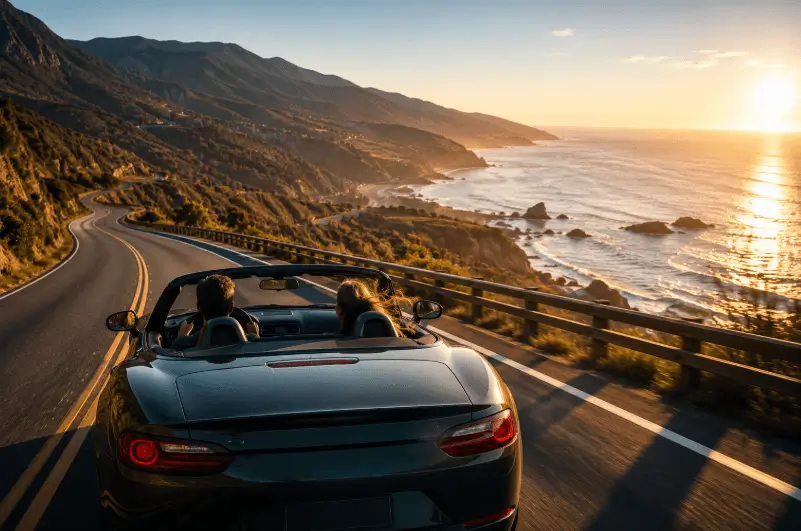
A scenic drive through coastal roads, mountain passes, or rural countryside allows for stops that are not pre-planned or dictated by schedules. Cafés, viewpoints, villages, and hidden routes become part of the experience. The journey becomes layered rather than linear.
This desire for slower, more intentional travel reflects a wider movement towards “experience-first” lifestyles, where the value of an activity is measured not just by its outcome, but by the quality of the process itself.
Social Media Has Redefined Scenic Travel
Platforms such as Instagram, TikTok, and YouTube have played a significant role in popularising drive tourism.
Visually striking road journeys, drone footage of winding coastal highways, and cinematic travel vlogs have helped reframe driving as an aesthetic experience. Certain routes have gained global recognition not because of traditional tourism campaigns, but because of user-generated content that captures their visual appeal.
As a result, roads themselves have become destinations in their own right. Famous driving routes are now visited specifically for the experience of travelling them, rather than simply reaching a location at the end.
This trend has also influenced expectations. Travellers increasingly look for routes that offer photogenic scenery, unique driving conditions, and a sense of narrative progression. The journey is documented, shared, and re-experienced through digital platforms, extending its impact beyond the physical trip.
The Appeal of Flexibility and Self-Guided Exploration
One of the defining features of drive tourism is autonomy.
Unlike guided tours or structured holiday packages, self-driving travel allows individuals to shape their own experience. Routes can change spontaneously, detours become opportunities, and timing is entirely self-determined.
This flexibility is particularly appealing in a travel landscape where many experiences feel increasingly standardised. Drive tourism offers a counterbalance — something less predictable, more personal, and more adaptable to individual preferences.
It also encourages deeper engagement with local environments. Travellers are more likely to stop in small towns, explore less-known attractions, and interact with places that would otherwise be bypassed in conventional tourism models.
In this sense, driving becomes not just transportation, but a form of discovery.
Automotive Culture and the Experience Economy
Drive tourism sits at the intersection of travel and automotive culture.
For many enthusiasts, the vehicle itself plays an important role in shaping the experience. Comfort, handling, design, and personalisation all contribute to how a journey feels. A well-suited vehicle can transform a long drive into something immersive rather than merely functional.
This has led to a broader interest in tailoring vehicles for travel-focused experiences. From touring-focused suspension setups to comfort-oriented interiors and aesthetic modifications, drivers are increasingly considering how their cars support lifestyle use rather than just daily commuting.
Personal identity also plays a role. Vehicles often reflect the personality of the driver, especially within enthusiast communities where presentation and detail matter. Subtle choices in styling and finishing touches contribute to how the journey is experienced and remembered.
For motorists who value this sense of individuality, companies such as Number 1 Platesreflect a wider culture of automotive personalisation where even small design details contribute to the overall identity of a vehicle.
Scenic Routes as Modern Cultural Infrastructure
Around the world, governments and tourism boards are beginning to recognise the value of scenic driving routes as part of cultural infrastructure.
Designated routes through national parks, coastal highways, and historic regions are being promoted not just for their destinations, but for the quality of the driving experience itself. Rest stops, viewpoints, and signage are increasingly designed with road travellers in mind.
In some regions, these routes are becoming key economic drivers for rural communities, bringing visitors to areas that might otherwise receive limited tourism traffic.
This highlights an important shift: roads are no longer seen purely as infrastructure for transport efficiency, but also as curated cultural and recreational spaces.
See also: Software Development Best Practices
The Psychology Behind Slower Travel
The rise of drive tourism is also linked to changing attitudes towards time and wellbeing.
Modern lifestyles are often characterised by speed, efficiency, and digital overload. In contrast, driving through scenic environments offers a sense of detachment from constant connectivity. Even with modern in-car technology, road travel provides periods of focus, presence, and visual engagement with the physical world.
This slower pace of travel can feel restorative. It allows individuals to move at a human scale, observing gradual changes in landscape and atmosphere rather than transitioning instantly between destinations.
There is also a strong emotional component. Many people associate road trips with freedom, independence, and exploration — themes that remain culturally powerful across generations.
The Future of Drive Tourism
As travel preferences continue to evolve, drive tourism is likely to expand further, particularly as electric vehicles become more common and charging infrastructure improves along major routes.
EV-friendly scenic routes are already being developed in several regions, combining sustainability with leisure travel. At the same time, advances in navigation technology, real-time route planning, and connected vehicle systems are making long-distance road travel more accessible and predictable.
However, the core appeal of drive tourism is unlikely to change. It is not defined by technology, but by experience — the idea that the journey itself holds value equal to the destination.
Conclusion
Drive tourism represents a broader shift in how people approach travel. In a world increasingly shaped by speed and efficiency, more travellers are choosing experiences that prioritise presence, exploration, and connection with the journey itself.
Whether through scenic coastal roads, mountain routes, or self-designed itineraries, driving has become more than a means of transport. It is now a form of storytelling, personal expression, and cultural engagement.
As this trend continues to grow, the road is no longer just a path between two points — it is becoming the destination in its own right.