British travellers have a complicated relationship with the Italian lakes. We love the idea of them. We are less keen on the reality of shuffling through Como in August behind a phone held aloft, or paying London prices for a spritz on a jetty we can barely reach for the crowd. Somewhere along the way the most photographed corners of northern Italy started to feel less like a holiday and more like a queue with a view.
So it is worth pointing north. Right to the top of Lake Maggiore, where the water narrows and Italy runs out of road before it becomes Switzerland, sits the town of Cannobio. It rarely makes the front of the brochures. That is precisely the point.
Why the north end feels different
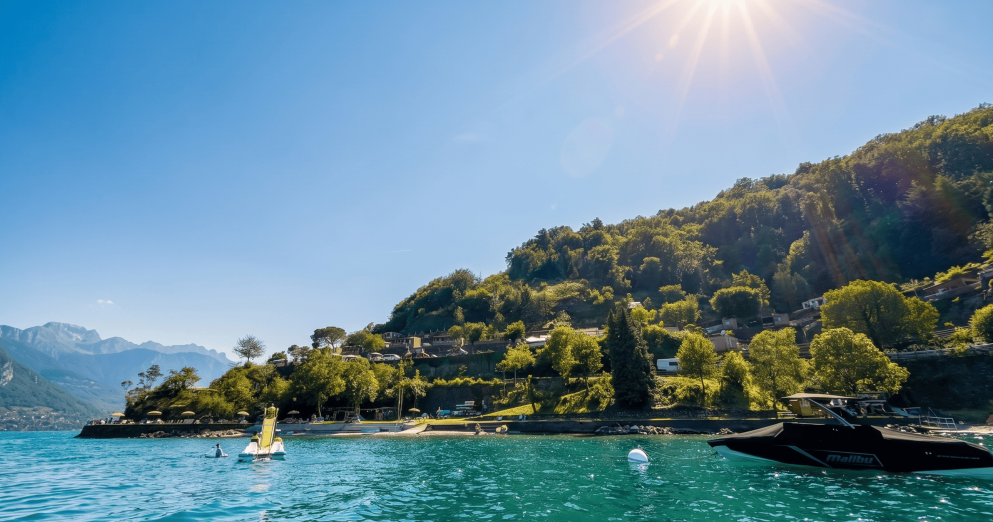
Maggiore is the second largest of the Italian lakes, and its geography does something useful for the visitor: the further north you go, the quieter it gets. The big set-piece destinations cluster further south, near Stresa and the Borromean Islands. Up at Cannobio, the lake is a slim ribbon pressed between steep hills, and the light behaves differently for it. It arrives late over the mountains in the morning and leaves early in the evening, and in between it sits on the water with a clarity you don’t get where the lake broadens out.
This is not a secret, exactly. Cannobio’s lakefront beach has been awarded the Blue Flag more than once, its Sunday market is among the longest running on the lake, and walkers have long known the Orrido di Sant’Anna, the gorge just up the valley where a river has cut pools out of the rock. But it has stayed a working town rather than a stage set. People live here. The greengrocer is a greengrocer, not a concept.
For a UK audience weighing up where to spend a fortnight, that distinction matters more than it sounds. You are not buying a backdrop. You are buying a place that carries on whether or not you photograph it.
The way we stay is changing
There is a wider shift worth naming here, because it explains why the northern lake suits the current mood. British holiday habits have moved. The pandemic-era rediscovery of camping and the open air did not fade when flights resumed; it hardened into a preference. Plenty of people who would once have booked a hotel now want a base with a kitchen, a bit of outdoor space, and the freedom to eat when they like rather than when a dining room decides.
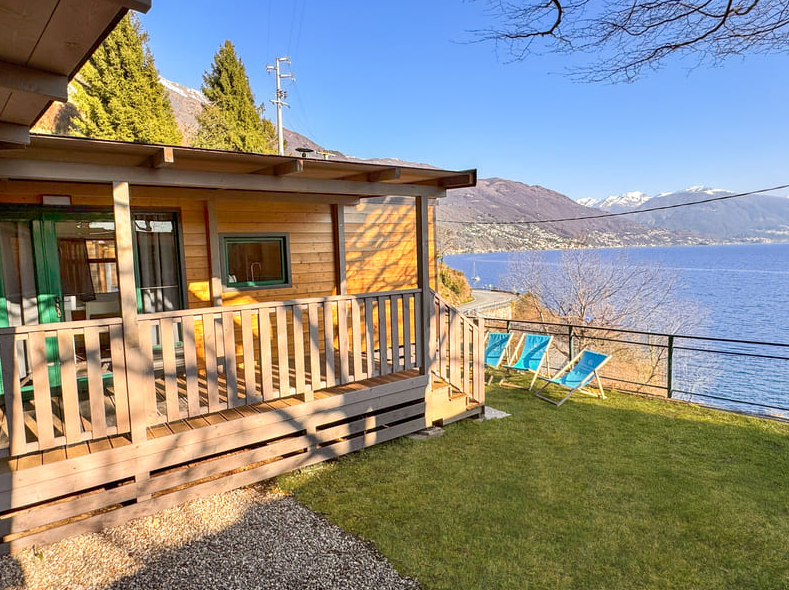
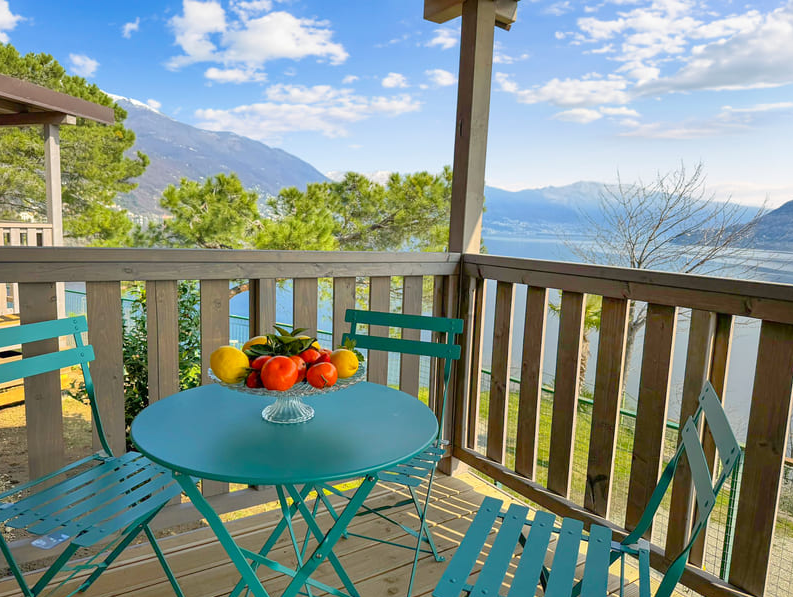
The lakes have quietly adapted to this. Along the northern shore you now find sites that offer the full range under one gate: pitches for those who still want canvas and a mallet, timber-decked mobile homes for people who cannot face an assembly job after a long drive, and self-contained apartments for families who want solid walls and a cot in a separate room. One long-established Lago Maggiore Camping site at Cannobio covers all three under a single gate, which tells you something about how blurred the old lines between camping and self-catering have become.
The appeal is practical. A family can pitch a tent one year and take a mobile home the next without changing where they park the car or which beach the children run off to. The holiday scales up or down with the budget, and nobody has to commit to a category that no longer fits them.
The economics of eating well
Here is where the north quietly wins for the cost-conscious British visitor. The failing of the glossier resorts is not that the food is bad. It is that eating out every night becomes a decision you start dreading by day four, when the mental arithmetic kicks in and someone suggests, not entirely joking, that they could just do pasta at the apartment again.
A good lakeside kitchen that charges fairly changes the whole rhythm of a trip. When a family can sit down to fresh pasta, fish from the lake or the morning market, and a proper wood-fired pizza without wincing at the bill, they do it more often, and the holiday relaxes. The children eat early and vanish back towards the water. The adults linger over a glass of something local. That is the version of Italy people think they are booking and too rarely get.
Swimming, and the newer thing on the water
The private stretches of shoreline that some sites keep for their guests solve a problem British visitors know well from home: the scramble for space. No day-trippers claiming the loungers by nine. No hunting for a gap on the shingle. You walk in from your own beach, the water cold enough to catch your breath in the first few steps, and by mid-afternoon the surface has gone soft and gold and the whole thing feels faintly unfair.
The water is also where a genuinely new trend has landed. Electric hydrofoil boards — eFoils — have moved from a curiosity to something you can actually learn on a summer holiday. The board lifts clear of the surface once it gathers speed, and you glide along a foot above the lake with no engine noise and no wake. Several schools on Maggiore now teach complete beginners, children included. It is the rare watersport that looks impossible and turns out to be learnable in an afternoon, which makes it a decent antidote to the idea that a lake holiday means sitting still.
See also: Why Travel Vaccinations Are Worth Planning Ahead
A base, not a bubble
The strongest argument for the northern lake is what surrounds it. This is not a resort that expects you to stay inside its fence. Cannobio’s Sunday market spills up the streets with cheese, leather and olives. The valley behind town climbs to that river gorge and its swimming pools. Boats run down to the Borromean Islands and their baroque gardens, and north across the border to Ascona and Locarno, the Swiss end of the lake, where the promenades come with palm trees and a certain moneyed calm. Walkers have paths for every pair of legs, from a flat shoreline stroll to a climb that hands you the whole lake at the top.
It is close, too, which the maths-minded traveller will appreciate. The Milan airports sit under two hours away by car, well within easyJet and Ryanair territory, so the northern lake is no harder to reach than the crowded middle of it.
The point of going quieter
None of this is an argument that Cannobio is undiscovered, or that the busy resorts are doing it wrong. Plenty of people want the bustle and the big names, and they are welcome to them. But there is a strong case, especially for British families counting both their pennies and their patience, that the better version of the Italian lakes is the one that never learned to shout.
Slow down, go north, and the lake gives you back something the crowded end mislaid a while ago: the feeling of being somewhere real, rather than somewhere you have already seen a thousand times on a screen.