Why Utah’s Geography Changes the Proposal Equation
Utah offers a wider range of proposal backdrops within a single state than almost anywhere else in the country, stretching from sandstone arches to alpine lakes within a few hours’ drive. That variety means couples planning a proposal here face a different set of questions than they would in a state with one dominant landscape. The choice isn’t simply scenic versus not scenic; it’s about matching a location’s mood, light, and accessibility to the moment you’re trying to create. A quiet overlook above a canyon reads very differently than a windswept arch surrounded by other hikers, even though both might show up in the same search results.
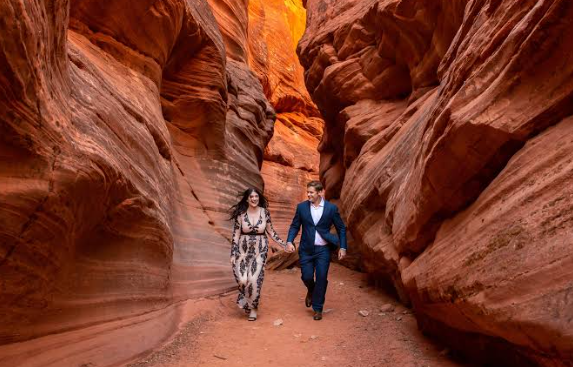
Southern Utah’s national parks draw the most attention, and for good reason, since the rock formations there look almost staged even without any editing. Zion’s narrow canyons create an intimate, enclosed feeling, while the open expanses near Moab give a sense of scale that can make a small gesture feel enormous. Northern Utah’s mountains offer a cooler, greener alternative, with aspen groves and granite peaks that shift dramatically with the seasons. Choosing between these regions often comes down to timing, since summer heat in the desert parks can be brutal while mountain trails may still hold snow into early summer.
Popular viewpoints in Utah’s parks fill up fast, particularly at sunrise and sunset when the light is best for both the moment and any photos taken afterward. Arches National Park, for instance, often requires timed entry reservations during peak season, which means a spontaneous proposal plan needs a bit of advance logistics work regardless of how romantic the setting looks online. Permits aren’t usually required for a simple proposal on public land, but commercial photography sessions inside national parks do require them, so anyone hiring a photographer should check ahead rather than assume. Weekday mornings tend to offer far more solitude than weekend afternoons, which matters if privacy during the moment itself is a priority.
Working With Someone Who Knows the Terrain
Weather adds another layer of planning that’s easy to underestimate. Desert temperatures can swing more than forty degrees between day and night, and afternoon thunderstorms in late summer can turn a dirt trail into a muddy mess within minutes. Mountain locations carry their own risks, including sudden snow at higher elevations even in late spring. Building in a backup plan, whether that’s an alternate trail or a different time of day, keeps the day from unraveling if conditions don’t cooperate. Couples who research a short list of options rather than fixating on one single spot tend to have more flexibility when something unexpected comes up.
See also: Looking for a Reliable Car Rental in Hanoi? Why a 16-Seater Is Ideal for Group Travel
Once the general region and season are settled, the next decision is whether to handle logistics alone or bring in someone who already knows the area well. A photographer familiar with a specific canyon or overlook can often suggest timing adjustments that make a real difference, such as arriving forty minutes before official sunrise to beat both the crowds and the harsh midday light. This kind of local knowledge is hard to replicate from research alone, since conditions on the ground change based on recent weather, trail closures, and even seasonal wildlife activity. A detailed guide covering best places to propose in Utah can help narrow down which locations actually suit a couple’s style, rather than just chasing whatever looks most popular on social media.
Hiring local support also solves a practical problem that many couples overlook until the day itself: someone has to capture the moment without the couple noticing. A hidden photographer working with a long lens, or one posing as a casual hiker nearby, can document a proposal without tipping off the partner being surprised. This arrangement takes coordination, including scouting the exact spot beforehand and agreeing on hand signals or timing cues. Couples who skip this step sometimes end up with only a few blurry phone photos, which can feel like a missed opportunity years later when looking back on the day. Working with someone who has handled proposals across different Utah landscapes also means fewer surprises about permits, lighting, or crowd patterns on the day it actually counts.