Reliable access to drinking water is important in offices, hospitality settings, retail environments and other commercial workplaces. A water dispenser can provide a convenient shared facility for employees, customers and visitors.
However, commercial environments often have different requirements from private homes. Higher usage, longer operating hours and varied user needs make capacity, durability and maintenance especially important.
Understanding Commercial Water Requirements
Before selecting a dispenser, businesses should estimate how many people will use it and how frequently. A small office may have relatively consistent demand, while a busy customer-facing environment may experience heavy use during particular periods.
The expected number of users helps determine the appropriate capacity and number of units. It can also influence whether a compact countertop model or a larger floor-standing system is more suitable.
Businesses should consider whether the dispenser will serve employees only or be available to customers and visitors as well.
Choosing Between Different Dispenser Types
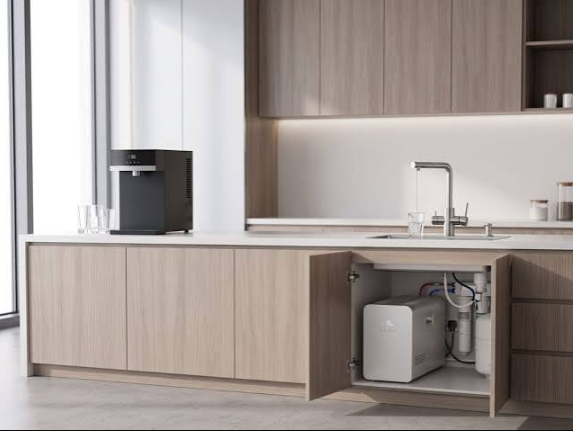
Commercial water dispensers come in several configurations. Some use bottled water, while others connect directly to a building’s water supply.
Bottle-based systems may be suitable where plumbing access is limited, but businesses need to manage deliveries, storage and replacement. Connected systems can provide a continuous supply when properly installed and maintained.
Some units offer ambient, cold or hot water options. The appropriate combination depends on the workplace and the way people use the facility.
Evaluating Capacity and Performance
A dispenser should be able to meet normal demand without creating long queues. Businesses should check the manufacturer’s stated capacity and understand how quickly the unit can deliver water at the required temperature.
For a busy workplace, recovery time between uses may be an important consideration. A unit that performs well under light usage may not be suitable for a location with continuous demand.
If several departments or public areas require water access, installing multiple units may be more practical than relying on a single central dispenser.
Installation and Workplace Layout
The dispenser should be placed in an accessible area with sufficient room for people to use it comfortably. It should not block walkways, emergency exits or other important routes.
For direct-connected systems, businesses should confirm plumbing requirements, water pressure and any electrical needs. Installation should be carried out according to the manufacturer’s instructions.
The surrounding area should be easy to clean, with appropriate arrangements for handling spills and drainage.
Maintaining Hygiene and Reliability
Commercial equipment may experience frequent use, making maintenance planning essential. Regular cleaning helps keep external surfaces, outlets and drip trays in suitable condition.
If the system uses filters, businesses should maintain a record of replacement dates. Servicing requirements should be understood before installation, including who is responsible for arranging inspections and repairs.
A maintenance schedule can help reduce unexpected downtime and ensure that the equipment remains suitable for daily use.
Comparing Long-Term Operating Costs
Businesses should consider more than the purchase price. Ongoing costs may include electricity, filters, servicing, water supply and repairs.
A unit with a lower initial cost may not be the most economical option if it requires frequent maintenance or cannot handle the expected demand.
Review warranty coverage, service availability and the expected lifespan of the equipment. These factors can help businesses assess the overall value of an investment.
Exploring Workplace Water Dispenser Solutions
Businesses comparing a water dispenser can review workplace solutions and assess available options according to staff numbers, customer access, space and operating requirements. It is useful to confirm technical specifications and maintenance arrangements before making a purchase.
Frequently Asked Questions
1. What type of dispenser is best for a busy office?
The right option depends on the number of users, daily demand, available space and water supply arrangements. Capacity and recovery performance should be compared.
2. Are direct-connected dispensers suitable for commercial environments?
They can be suitable where plumbing and installation requirements can be met. Businesses should confirm compatibility and servicing needs.
3. How can businesses keep dispensers hygienic?
Follow the manufacturer’s cleaning instructions, maintain filter replacement schedules and arrange periodic servicing where required.
Conclusion
Selecting a commercial water dispenser involves assessing demand, capacity, installation and ongoing maintenance. Businesses should consider the number of users, operating conditions and total ownership costs before choosing a model. A system matched to the workplace can provide convenient water access while supporting reliable daily operations.