For much of the modern tourism era, travel has been defined by structure. Guided tours, fixed itineraries and tightly scheduled experiences have long shaped how people explore new destinations. From coach trips through European capitals to curated group holidays across Asia, the emphasis has traditionally been on efficiency and predictability.
But this model is beginning to change.
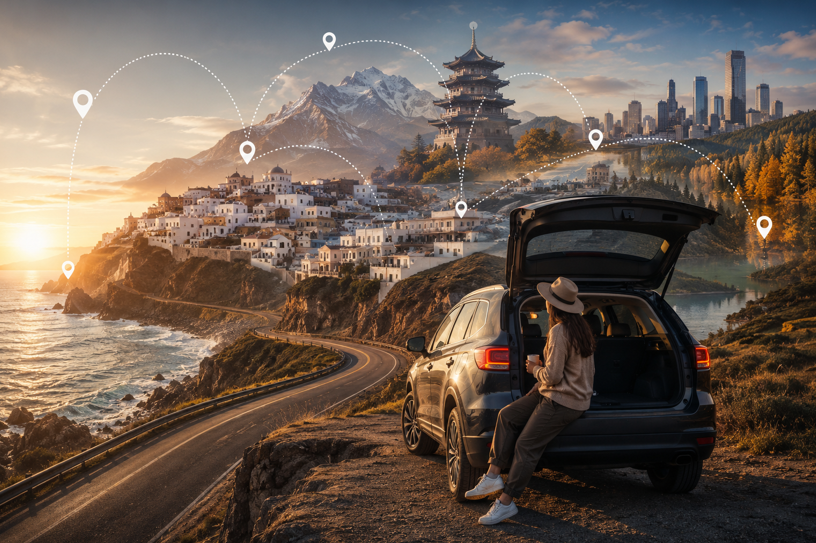
A growing number of travellers are turning away from pre-packaged experiences in favour of self-drive travel—an approach that prioritises flexibility, autonomy and personal discovery. Instead of following rigid schedules, tourists are choosing to navigate destinations on their own terms, using cars not just as transport, but as tools for exploration.
This shift is reshaping how people experience travel, and it is quietly influencing the future of global tourism.
The Shift Away from Structured Tourism
Traditional tourism often relies on predefined routes and schedules. While this approach offers convenience, it can also limit spontaneity. Travellers move from one landmark to another with little opportunity to explore what lies between them.
Self-drive travel challenges this structure.
By giving travellers direct control over their journey, it allows for detours, unexpected stops and changes in direction. A scenic road spotted on a map can become part of the itinerary. A small town not listed in any guidebook can turn into the highlight of a trip.
This flexibility is increasingly appealing in a world where many people feel their daily lives are highly structured. Holidays are no longer just about seeing famous landmarks—they are about experiencing places in a more personal and immersive way.
Autonomy as the New Luxury
One of the key drivers behind the rise of self-drive tourism is the growing value placed on autonomy.
Modern travellers are less interested in passive experiences and more interested in shaping their own journeys. Rather than following a guide, they want to make decisions in real time, adjusting plans based on mood, weather or curiosity.
In this context, independence itself has become a form of luxury.
Being able to stop where you want, travel at your own pace and explore off-the-beaten-path locations offers a sense of freedom that structured tours cannot easily replicate. For many, this freedom is now seen as more valuable than convenience alone.
The Role of Road Infrastructure and Technology
The growth of self-drive tourism has been made possible by significant improvements in infrastructure and technology.
Modern road networks are more accessible than ever, connecting rural and urban regions with relative ease. At the same time, digital navigation tools have transformed how travellers plan and execute journeys.
Real-time traffic updates, satellite navigation and location-based recommendations allow drivers to explore unfamiliar regions with confidence. What once required detailed maps and local knowledge can now be managed through a smartphone or in-car system.
This technological support has reduced the barriers to independent travel, making self-drive tourism more accessible to a wider audience.
A More Personal Way to Experience Travel
One of the most notable differences between guided tours and self-drive travel is the level of personal connection it creates with the destination.
When travellers are not bound by fixed schedules, they tend to engage more deeply with their surroundings. Conversations with locals, unplanned stops and spontaneous discoveries all become part of the experience.
This often results in a more meaningful form of travel—one that is shaped by individual choices rather than group consensus.
The journey itself becomes a collection of personal moments rather than a checklist of attractions.
The Influence of Car Culture on Travel Trends
The rise of self-drive tourism also reflects broader changes in automotive culture.
Cars are increasingly seen not just as transportation tools, but as extensions of personal identity and lifestyle. Drivers often choose vehicles that reflect their preferences for comfort, technology or design, and these choices influence how they approach travel.
Personalisation plays a key role in this relationship. Many motorists invest in features and modifications that make long-distance travel more enjoyable and distinctive. Within this wider culture of automotive individuality, companies such as Plates Express sit alongside other forms of vehicle customisation, reflecting how drivers continue to shape their vehicles to suit personal taste and identity.
In this way, the vehicle becomes part of the travel experience itself, rather than simply a means of reaching a destination.
Flexibility Over Fixed Itineraries
One of the defining advantages of self-drive tourism is flexibility.
Unlike guided tours, which operate on strict schedules, self-drive travel allows for constant adjustment. Travellers can extend their stay in a location they enjoy or move on quickly if something does not meet expectations.
This adaptability is particularly valuable in regions with diverse landscapes or cultural experiences. A single journey can incorporate cities, coastlines, mountains and rural areas without the constraints of organised group travel.
For many travellers, this freedom to shape the journey in real time is what makes self-drive tourism so appealing.
Sustainability and Changing Travel Preferences
As travel preferences evolve, sustainability is also becoming an important consideration.
Self-drive tourism can offer opportunities for more efficient and responsible travel, particularly when paired with modern fuel-efficient or electric vehicles. Travellers can plan routes that reduce unnecessary detours and choose destinations that align with personal values.
While environmental impact depends heavily on vehicle type and travel behaviour, the flexibility of self-drive journeys can encourage more mindful decision-making compared to larger, pre-planned group travel options.
See also: Egypt Is Becoming One of the Most Experience-Driven Destinations in Global Travel
The Future of Independent Travel
Looking ahead, self-drive tourism is likely to continue growing as travellers place greater emphasis on autonomy and personal experience.
Advances in vehicle technology, including electric powertrains, autonomous features and connected navigation systems, will further enhance the appeal of independent travel. These developments will make long-distance journeys more accessible, efficient and adaptable.
At the same time, the desire for meaningful, flexible experiences is unlikely to diminish. As tourism becomes more global and interconnected, travellers are increasingly seeking ways to differentiate their journeys and make them feel unique.
Self-drive travel offers exactly that opportunity.
Conclusion
The rise of self-drive tourism reflects a broader shift in how people approach travel. Rather than relying on structured itineraries, many travellers now prefer the freedom to explore destinations on their own terms.
This movement is driven by a combination of technological advancement, changing consumer expectations and a growing desire for more personal and meaningful experiences.
In a world where so much is pre-planned and optimised, the open road offers something different: the ability to choose your own direction, change your mind and discover places you were never meant to find.
As global tourism continues to evolve, self-drive travel is not just becoming an alternative—it is becoming a defining part of the future of exploration.